how are police dogs trained

How Are Police Dogs Trained?

If you're wondering how police dogs are trained, K10 Working Dogs can give you a real answer, not a general one. Our trainers put police K9s through a structured training program every day, preparing dogs for departments and agencies around the world. This article walks through our selection standards, the actual training stages a police dog goes through, and what separates single purpose from dual purpose K9s.

Police Dog Selection Criteria

how are police dogs trained

Before a dog ever enters a training program, it has to earn its place. Police forces around the world look for the same core qualities in a working K9, which makes it possible for us to select and train dogs against a consistent global standard rather than reinventing criteria for every customer.

A stable police dog needs to be:

  • Social. A police K9 needs to stay friendly and confident around the public. We socialize every dog extensively before it enters a program, exposing it to people, noise, and unfamiliar environments as early as possible.
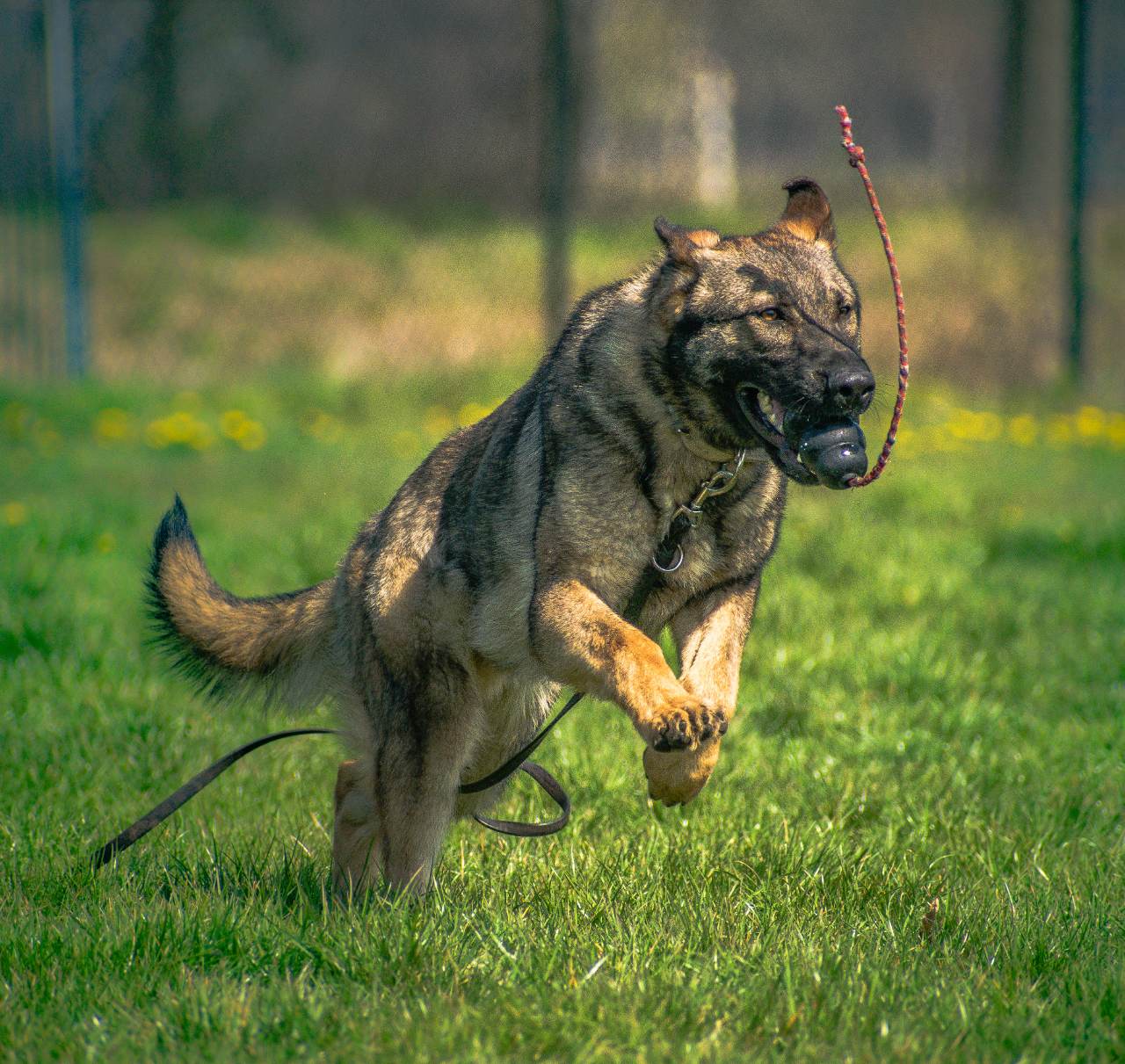
  • Driven to work. Our trainers test work drive using a ball or kong. A dog that goes fully obsessive over a toy is almost always a dog that trains fast and stays motivated under pressure.
  • Medically sound. Every dog we buy is x-rayed on hips, back, and elbows before entering a program.

Medical Screening and X-Ray Grading

The last step before we accept a dog from our suppliers is medical clearance. All dogs are x-rayed and graded using the international A–B–C–D–E classification system, from excellent to very poor. We only select dogs graded A or B — anything lower risks a shortened working life and higher long-term veterinary cost for the department that buys the dog.

Grade Meaning Accepted by K10?
AExcellentYes
BGoodYes
CFairNo
DPoorNo
EVery poorNo

The Police Dog Training Stages

Once a dog passes selection, training moves through a series of stages. We train using positive reinforcement — rewarding correct behavior rather than relying on coercion — because it produces a dog that works reliably under pressure instead of one that only complies out of fear.

  • Obedience. The dog must sit, stay, heel, and release on command without hesitation. This is the foundation everything else is built on, since a handler needs full control before any specialized work begins.
  • Agility and environmental exposure. Dogs learn to jump obstacles, climb stairs, and work confidently in urban environments, vehicles, and unfamiliar buildings.
  • Bite work training. The dog learns to apprehend and release strictly on command, under full handler control at all times.
  • Detection training. The dog is trained to alert on a specific odor category, such as narcotics or explosives. A dog is only ever trained on one detection category, since it has no way to communicate to a handler which category triggered an alert.
  • Scenario training. Later-stage training mimics real police tasks: building searches, tracking, and crime scene searches, all under distraction and in varied conditions.
Police dog undergoing obedience training with handler

How Long Does It Take to Train a Police Dog?

Basic obedience and foundational training typically takes several months. Full training to a working certification standard, including either bite work or detection specialization, generally takes longer and depends on the dog's age, drive, and the complexity of the specialization. Most police dogs also complete annual re-certification once deployed, since a working K9 is never considered "finished" — training continues throughout its service career.

Single Purpose vs. Dual Purpose Police Dogs

We divide our police dogs into two categories:

Type Capability
Single purposeTrained for bite work only, or detection only
Dual purposeTrained for detection and bite work combined

A single purpose dog is trained exclusively for one function, either apprehension or detection. A dual purpose dog combines both. The right choice depends entirely on how a department intends to deploy the dog — for a closer look at how to decide, see our article on single purpose vs. dual purpose dogs.

Police Dog Training Levels We Offer

Depending on the customer, we deliver three levels of training:

Level What's Included Best For
GreenBasic skills only; foundation for single or dual purpose trainingDepartments with their own training staff
Pre-trained / semi-trainedBite and/or detection training, not yet specialized to a specific odorDepartments finishing specialization in-house
Fully trainedComplete certification, ready to work immediatelyDepartments needing a dog deployment-ready on arrival

What Does a Trained Police Dog Cost?

Pricing depends heavily on the training level and specialization you need. Green dogs cost the least since most of the training investment still lies ahead; fully trained dual purpose dogs cost the most, reflecting the hundreds of hours of specialized bite work and detection training already completed. Rather than publish a fixed number that won't reflect your specific requirements, we'd rather give you an accurate quote directly — contact us with the training level and specialization you need.

Frequently Asked Questions

How are police dogs trained without using force?

We train using positive reinforcement, rewarding correct behavior with toys, play, or food rather than relying on coercion. This produces a dog that performs reliably because it wants to work, not just because it's afraid not to.

What is the difference between single purpose and dual purpose police dogs?

A single purpose dog is trained for one function only — either apprehension or detection. A dual purpose dog is trained to do both. Dogs can only ever be trained to detect one odor category, such as narcotics or explosives, since they have no way to tell a handler which category triggered an alert.

At what age do dogs start police dog training?

Most dogs enter a full training program between 12 and 18 months old, once their temperament and physical development are clear enough to evaluate reliably.

Do police dogs need to be re-certified?

Yes. Most departments require annual re-certification for both patrol and detection functions, since reliability under real-world conditions needs to be verified regularly, not just proven once.

Can I buy a police dog that isn't fully trained?

Yes. We offer green, pre-trained/semi-trained, and fully trained dogs, so departments with their own training capability can buy at the stage that matches their budget and in-house resources.

How Are Police Dogs Trained: Summary

We take this work seriously. Daily training, strict selection standards, and an experienced training team are what separate a genuinely reliable police K9 from a dog that simply looks the part. Whether you need a green dog, a semi-trained dog, or a fully certified dual purpose K9 ready to work immediately, we can match the training level to your department's needs.

Please feel free to contact us anytime for current prices and availability.