


Bomb Sniffing Dogs: Breeds, Training & Certification Standards
At K10 Working Dogs, we train and place explosive detection dogs for law enforcement, security firms, and government agencies worldwide — so this guide covers bomb sniffing dogs the way they're actually selected and certified, not just a list of breed traits. A dog's nose can detect explosive traces at concentrations measured in parts per trillion, but breed alone doesn't make a reliable detection dog. What follows is how selection, training, and certification actually work.
Bomb Sniffing Dog Breed Comparison
| Breed | Key Strength | Best Suited For |
|---|---|---|
| Belgian Malinois | High drive, agility, intense focus under pressure | Airports, borders, high-threat environments |
| German Shepherd | Versatile, trainable, strong work ethic | Dual-purpose detection and patrol roles |
| Labrador Retriever | Calm temperament, exceptional scenting drive | Public spaces, confined areas like aircraft cabins |
| Dutch Shepherd | High drive with strong handler bonding | European law enforcement and detection units |
| Springer Spaniel | Compact size, agile in tight spaces | Vehicle and luggage searches |
Neither breed is objectively "best" — the right choice depends on the working environment. A Labrador excels in an airport terminal; a Malinois is better suited to a high-risk perimeter search.
How Bomb Sniffing Dogs Are Actually Selected
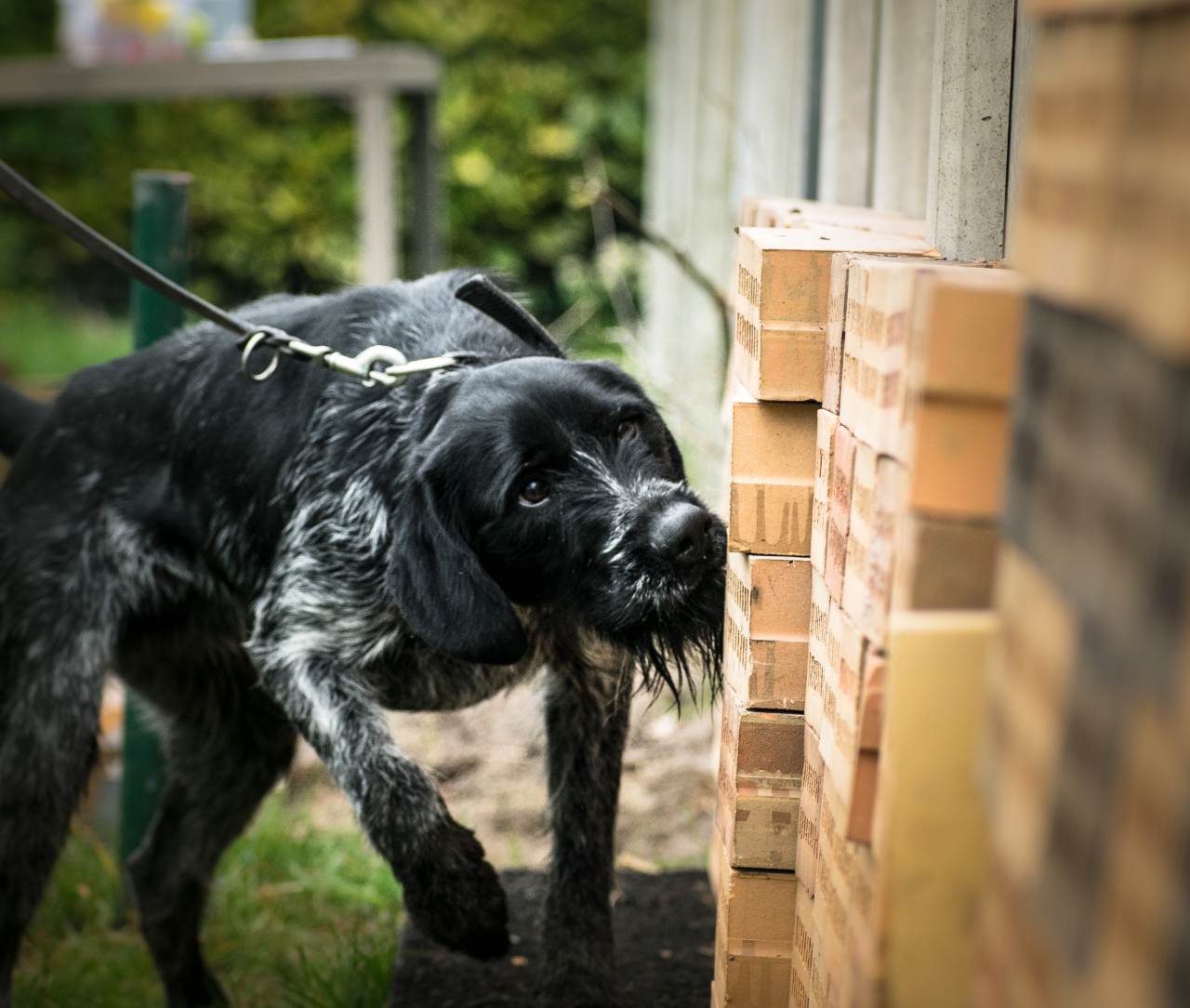
Breed is a starting filter, not the deciding factor. What actually determines whether a dog is fit for explosive detection work:
- Scent drive: the dog must be motivated by odor itself, not just the reward that follows finding it — this is what allows reliable detection over hours of searching.
- Nerve stability: candidates are tested around crowds, loud noises, and confined spaces, since real deployment environments (airports, transit hubs) are rarely calm.
- Focus under distraction: a detection dog needs to stay on task in busy, unpredictable environments without breaking concentration.
- Medical and structural screening: hip and elbow health, cardiac evaluation, and working-line pedigree all factor into whether a dog can sustain a multi-year detection career.
The Explosive Detection Training Process
Training a bomb sniffing dog is a staged, months-long process:
- Basic Obedience: reliable response to commands under distraction is the foundation every detection dog needs before scent work begins.
- Scent Imprinting: dogs are introduced to individual explosive compounds one at a time and trained to associate each scent with a reward, typically using clicker training to mark correct identifications.
- Odor Discrimination: dogs learn to distinguish target explosive odors from similar, non-target scents, reducing false alerts in real-world conditions.
- Real-World Deployment Training: dogs are trained in the actual environments they'll work in — airports, transit stations, public events — since a dog reliable in a training room can still struggle with the noise and crowd density of a real terminal.
- Certification and Recertification: most detection programs require dogs to pass certification before deployment and recertify periodically throughout their working career, not just once.
The Role of the Handler
A detection dog is only as reliable as its handler-dog partnership. Handlers are trained to read subtle changes in a dog's behavior — a pause, a head turn, a change in tail carriage — that signal a dog has picked up a scent before a full "alert" is given. This bond takes months to build and requires ongoing joint training to maintain.
Where Bomb Sniffing Dogs Are Deployed
- Airports and transit hubs: screening luggage, cargo, and public areas for explosive traces
- Border and customs checkpoints: vehicle and container searches
- Public events and venues: sweeping stadiums, conference centers, and crowded gatherings ahead of high-profile events
- Government and critical infrastructure: protecting buildings and facilities considered high-risk targets
Frequently Asked Questions
What is the best breed for bomb sniffing dogs?
Belgian Malinois, German Shepherds, and Labrador Retrievers are the most commonly used breeds, each suited to different environments — Malinois for high-threat perimeter work, Labradors for calmer public-facing detection.
How long does it take to train a bomb sniffing dog?
Full training from basic obedience through certification typically takes several months, followed by periodic recertification throughout the dog's working career.
How many explosive scents can a detection dog learn?
A well-trained detection dog can reliably distinguish dozens of individual explosive compounds and their combinations, a capability built through staged scent imprinting and discrimination training.
Can any dog become a bomb sniffing dog?
No. Breed is only a starting filter — individual dogs are evaluated for scent drive, nerve stability, focus under distraction, and physical health before entering a detection training program.
Sourcing Trained Explosive Detection Dogs
K10 Working Dogs is based in the Netherlands and supplies working dogs for sale to law enforcement, security companies, and government agencies worldwide. If you're evaluating detection dogs for airport security, border control, or public safety, explore our K9 handler training or contact us to discuss your requirements.