

Belgian Malinois Training: What K9 Professionals Actually Do
Most Belgian Malinois training advice online is written by pet bloggers who have never handled a working-line dog under real operational pressure. At K10 Working Dogs, we train and place Belgian Malinois for police units, military K9 programs, and security operations across the world — so this guide covers Belgian Malinois training the way it's actually done by professionals, not the recycled "positive reinforcement and patience" advice you'll find everywhere else. You'll get the real commands, the real exercise numbers, and the real line between what a pet owner should attempt and what belongs in the hands of a professional trainer.
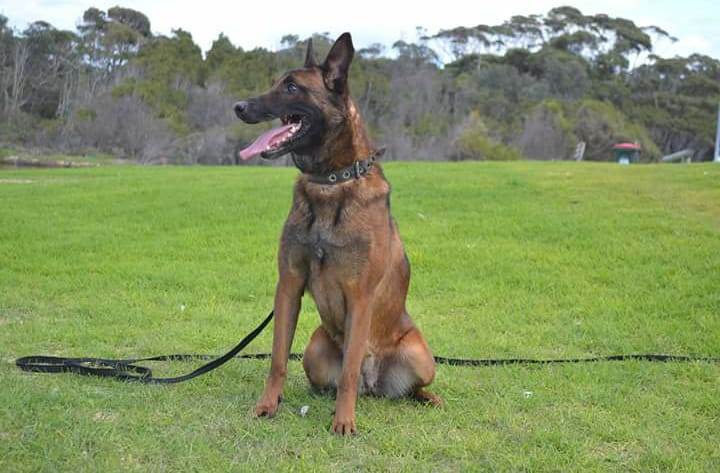
Why Generic Training Advice Fails With This Breed
The Belgian Malinois was bred for one purpose: to work. Every police force and military unit that uses this breed selects for the same traits — drive, nerve strength, and an almost obsessive need for a job. Those are exactly the traits that make cookie-cutter obedience advice fall apart. A Malinois that's under-stimulated doesn't get "a little bored" the way a Labrador does; it becomes destructive, reactive, and in worst cases genuinely dangerous to manage. Training this breed isn't about teaching commands — it's about giving an extremely capable working animal a legitimate outlet for what it was bred to do.
Belgian Malinois Temperament: What You're Actually Working With
- Drive over obedience: a Malinois will work for the task itself, not just the reward — this is why professional training uses structured drive-building, not just treats.
- Fast processing speed: they read handler body language and micro-hesitations instantly, which is why inconsistency is punished behaviorally faster than in most breeds.
- Low threshold for boredom: operational washout rates in working-line programs are driven almost entirely by insufficient outlet, not lack of intelligence.
- High bite and grip development potential: this is an asset in professional programs and a liability in untrained hands — see the protection work section below.
Puppy Socialization: The 8–16 Week Window
Every working dog program we run starts here, because it's the single highest-leverage period in the dog's life. Miss it, and no amount of later training fully compensates.
- Expose to varied environments: urban noise, vehicles, crowds, uneven surfaces — not just quiet home settings.
- Controlled exposure to people and animals: supervised, positive interactions, never flooding.
- Sound desensitization: gunfire-adjacent sounds, traffic, machinery — introduced gradually and always paired with calm, confident handling.
Core Obedience Commands Every Belgian Malinois Needs
One thing professional K9 programs do differently: commands are often given in a working language (Dutch, German, or French) rather than English. This isn't tradition for its own sake — it prevents the dog from responding to random bystanders shouting "sit" or "down" in public, and it creates a clean, unambiguous command set with zero overlap with everyday speech.
| Command (English) | Working Command | Purpose |
|---|---|---|
| Sit | Zit (Dutch) | Foundational control command |
| Down | Af / Platz | Impulse control, de-escalation |
| Stay | Blijf | Duration and distraction proofing |
| Come / Recall | Hier | The single most safety-critical command |
| Heel | Volg | Controlled movement at the handler's side |
| Release / Out | Los | Used constantly in bite and grip work |
| Bark / Alert | Blaf | Used in detection and guard scenarios |
For pet owners, English commands work fine — the principle that matters is picking one word per behavior and never varying it. "Down" cannot also mean "get off the couch" one day and "lie down" the next; the dog cannot parse that ambiguity the way a human would.
Daily Exercise and Mental Stimulation Needs
This is the single most searched, most poorly answered question about the breed — and the one most owners underestimate before bringing one home.
| Life Stage | Physical Exercise | Mental Stimulation |
|---|---|---|
| Puppy (8–24 weeks) | Short, low-impact play; avoid forced running on joints | 3–5 short training sessions/day, 5–10 min each |
| Adolescent (6–18 months) | 60–90 minutes, split into 2 sessions | Scent games, puzzle feeders, obedience proofing in distraction |
| Adult working line | 90 minutes–2+ hours, including structured work | A "job" — sport, detection work, or structured tasks, not just walks |
The number that matters most isn't the hour count — it's the job. A Malinois given two hours of unstructured running still ends up bored. A Malinois given 45 minutes of structured scent work, obedience, and controlled play is often calmer than one that ran for hours with no mental component.
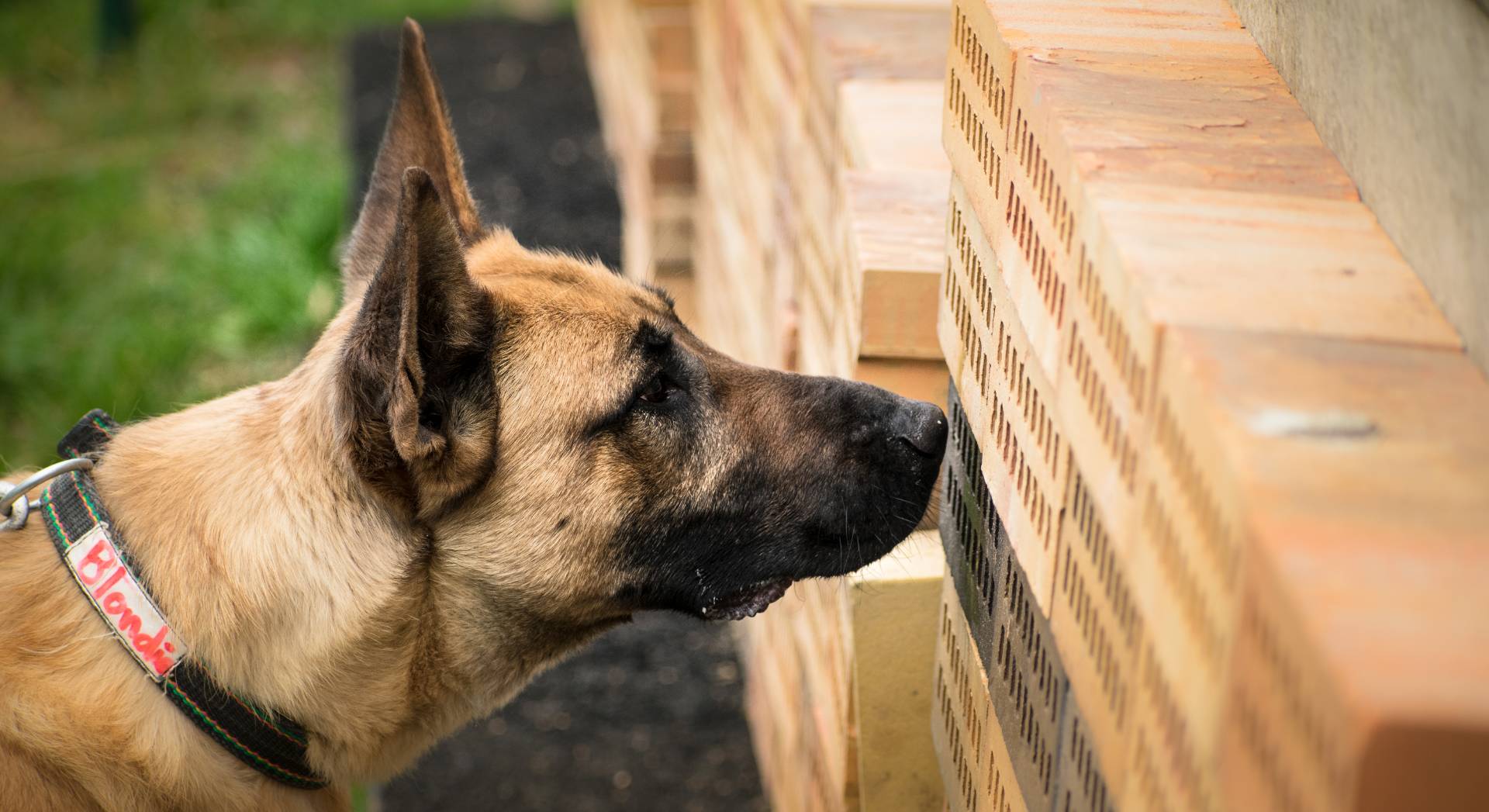
Agility and Scent Detection Training
Agility and scent work aren't hobbies for this breed — they're the closest a household setup gets to replicating the structured tasks working-line Malinois are bred for.
- Agility: jumps, weave poles, and tunnels build coordination and give the dog a legitimate outlet for its speed and precision. Integrate obedience commands mid-course to keep drive under control, not just high.
- Scent work: start with hidden treats or toys, then formalize into specific target odors. This is the foundation professional detection programs build on, just scaled down for a home environment.
Protection and Bite Work Training — Where the Line Is
This is the section most articles get dangerously wrong. Protection and bite work require a professional decoy, proper equipment, and a structured program — full stop. Attempting this without professional supervision is one of the most common causes of unmanageable aggression in the breed.
- Controlled aggression, not raw aggression: the goal is a dog that engages only on command and disengages instantly on release ("Los").
- Professional decoy work: bite sleeves and suits are used to teach targeting and build confidence without creating unpredictable real-world biting behavior.
- Obedience under drive: a dog that can't be called off a bite isn't trained — it's a liability. This is the actual standard used in police dog certification.
If you're considering protection training, the honest answer for most owners is: work with a certified professional trainer, or consider a fully trained protection dog that has already gone through a verified program.
What Police and Military K9 Programs Actually Require
Since this is the standard our own dogs are trained and certified against, it's worth outlining what separates a working-line certification program from home obedience training:
- Reliable off-leash obedience under extreme distraction (gunfire, crowds, other aggressive dogs)
- Verified handler-specific bonding and control, tested by unfamiliar decoys
- Task-specific certification — detection, patrol, or protection — not general "good behavior"
- Ongoing proofing, since certification is a floor, not a one-time achievement
Common Training Mistakes
| Mistake | Why It Backfires |
|---|---|
| Physical exercise without mental work | Builds a fitter, still-bored, still-destructive dog |
| Inconsistent commands or household rules | Creates confusion, which reads to the dog as unreliable leadership |
| DIY protection/bite training | Most common cause of unmanageable aggression in the breed |
| Skipping the 8–16 week socialization window | Largely irreversible once missed |
| Punishment-based correction | Damages handler trust; increases avoidance and reactivity |
Frequently Asked Questions
How long does it take to train a Belgian Malinois?
Basic household obedience: 4–6 months of consistent work. Full working-line certification for detection, patrol, or protection roles: typically 12–24 months, matching the standard used in professional K9 programs.
What is the best age to start training?
Socialization should begin at 8 weeks. Formal obedience can start immediately after, with structured task-specific training (agility, scent, protection) layered in from 6 months onward.
How much exercise does a Belgian Malinois actually need?
90 minutes to 2+ hours daily for adults, but the type of activity matters more than the duration — structured tasks outperform unstructured running for managing behavior.
Are Belgian Malinois hard to train?
They're not hard to train technically — they're demanding to train correctly. The breed learns fast, which means both good and bad habits set in quickly and are hard to undo.
Should I hire a professional trainer?
For basic obedience, most dedicated owners can succeed with consistency. For protection, bite work, or any task-specific working role, professional guidance isn't optional — it's the difference between a controlled asset and a liability.
The Bottom Line
Belgian Malinois training isn't a checklist of commands — it's about correctly channeling one of the most capable working breeds in existence. Get the fundamentals right — early socialization, consistent commands, and a real job for the dog's drive — and you get a stable, exceptional companion or working partner. Skip them, and you get exactly the "impossible to manage" dog this breed is unfairly stereotyped as.
If you're looking for a Belgian Malinois that's already been through verified professional training — for personal protection, security, or working roles — see our fully trained protection dogs or learn more about our training standards.